


Le Pit Club Marketplace
/01
Client
Le Pit Club
Industry
E-commerce, Auction
Involvement
Strategy, Brand Identity, UX Research, Customer Journey Map, Wire-framing, UI/UX Design, Design System, Content creation, AI tools
task
Design a global marketplace and auction platform for buying and selling vehicles, motorcycles, boats, and spare parts.
approach
After conducting in-depth research on the world’s largest car and auto-parts auction platforms, with a primary focus on the U.S. market, I developed the strategy and structural framework for the Lepidklapa auction marketplace. I also carried out a competitive analysis based on geographic relevance, evaluating each platform’s user journey, visual style, tone of voice, communication approach, catalog structure, and additional service offerings. Drawing on these insights, I created a visual value proposition that was translated into a design concept and used as the foundation for building the marketplace.
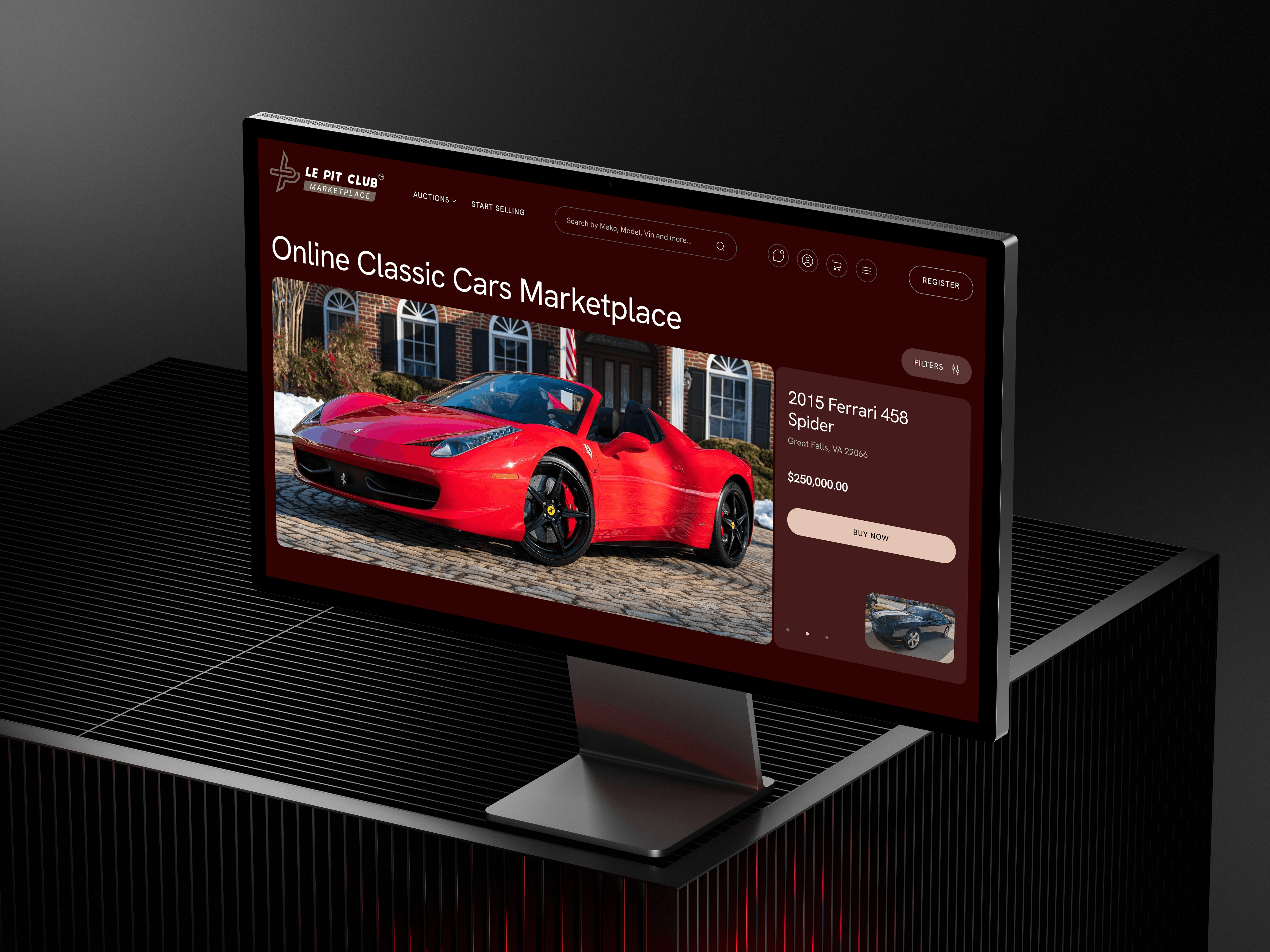
A marketplace dedicated to classic cars and parts is more than a place to find your dream vehicle — it is a powerful tool for growing your business and connecting with a community of classic car enthusiasts.
User Research
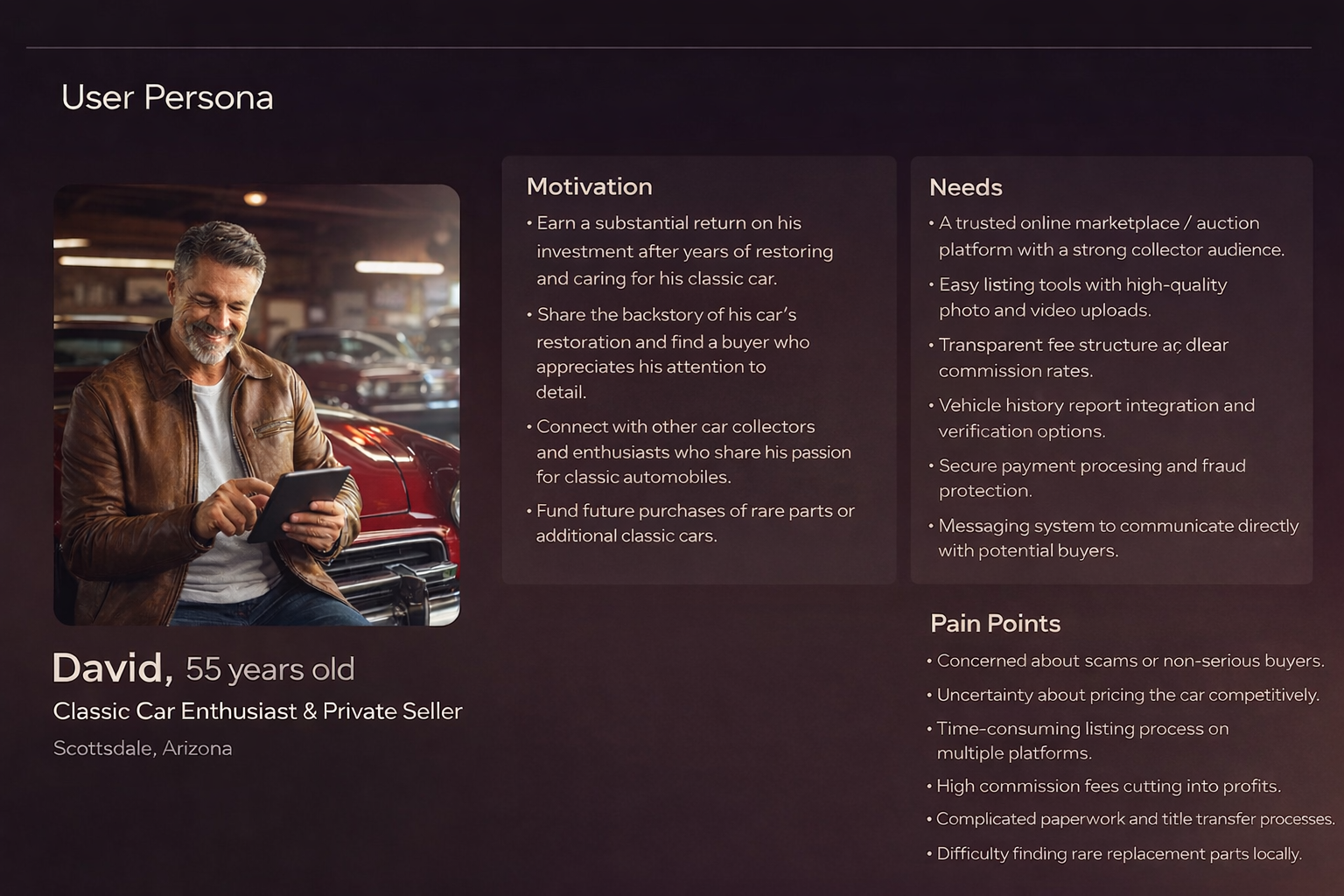
To design an accessible and user-centered platform, I conducted in-depth research on the target users of the marketplace. Several key personas were defined, including sellers, buyers, and platform administrators, each with distinct goals and interaction patterns.
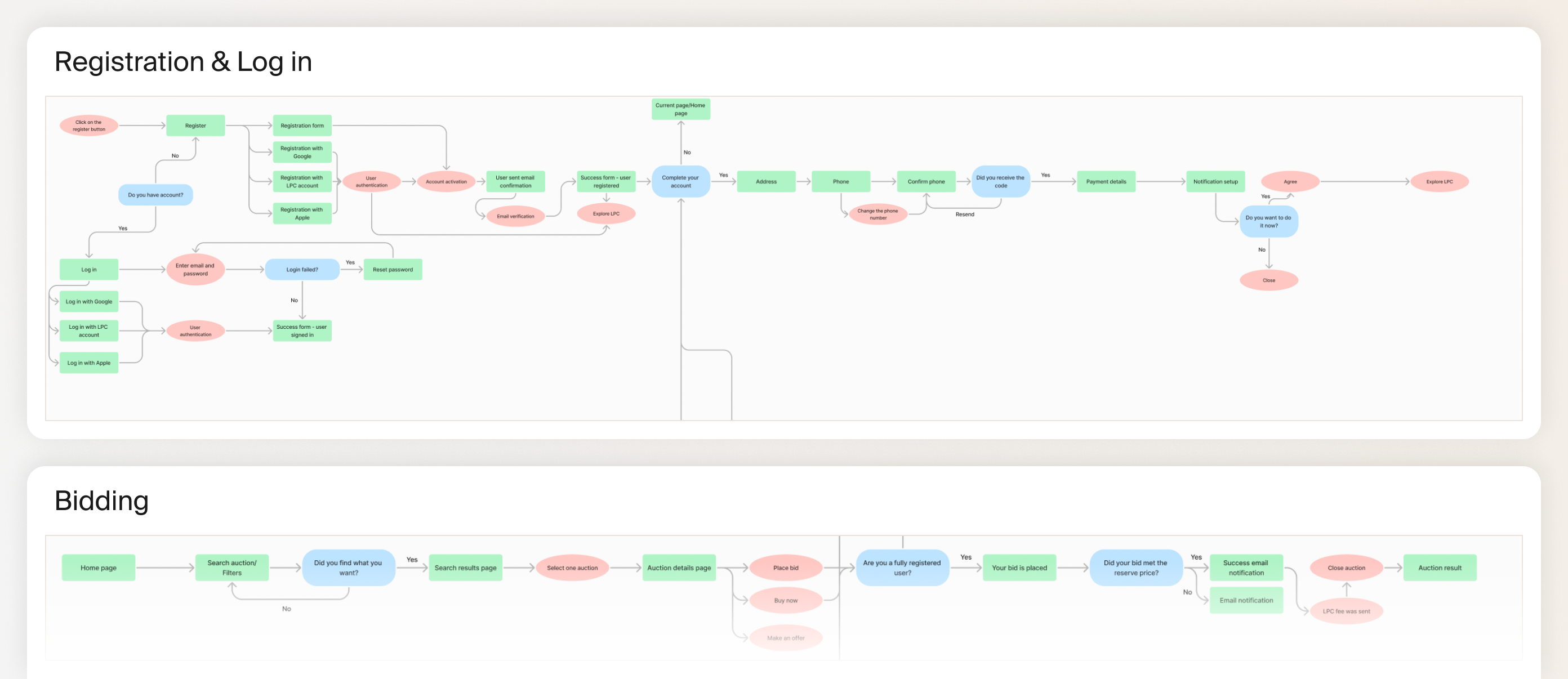
By identifying the core behavioral characteristics of each persona, I developed optimized user flows that minimize actions and reduce the number of steps required for users to achieve successful outcomes.
Visualise Customer Journey
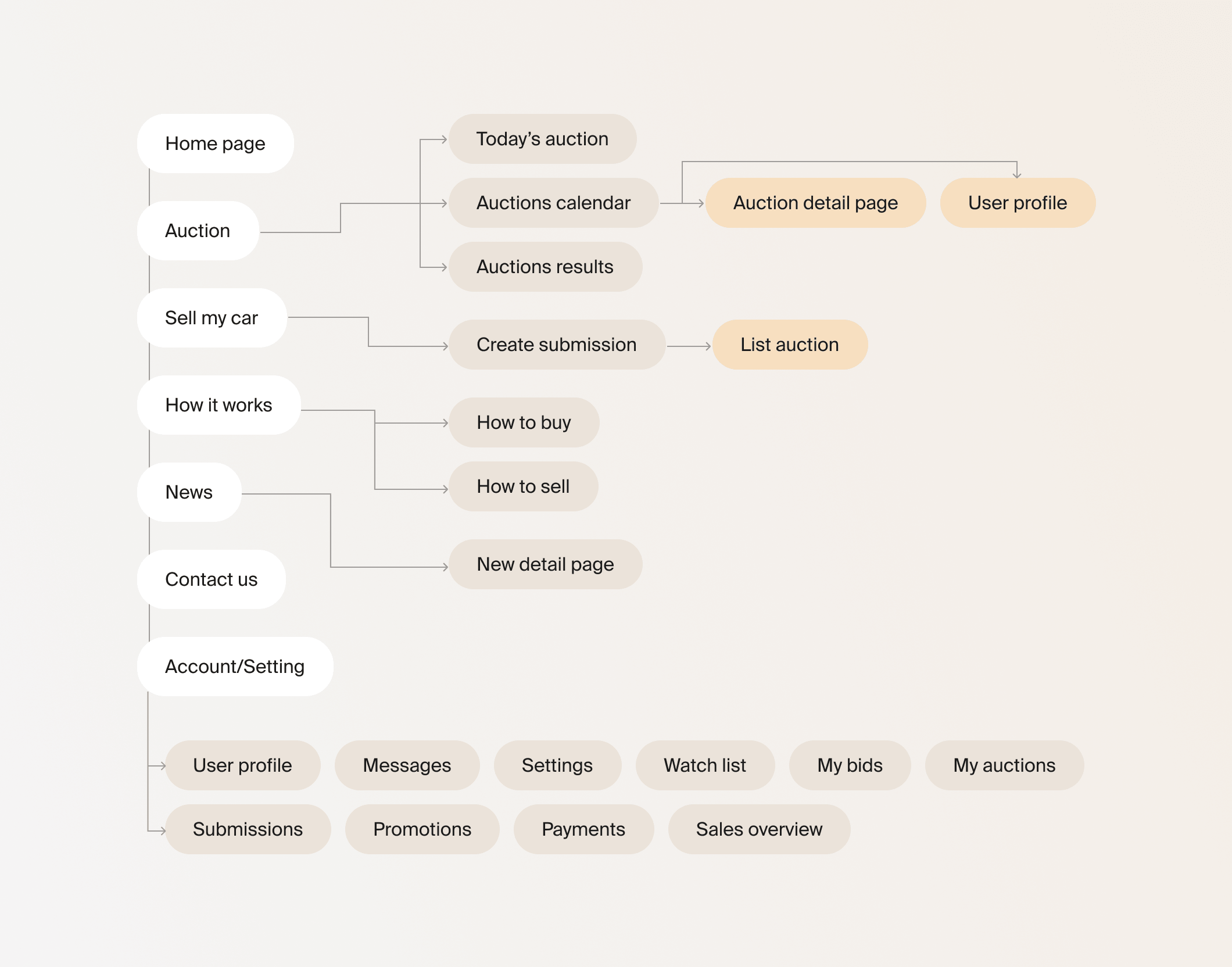
To ensure a seamless transition between marketplace functionalities while aligning with the team’s production capabilities, I designed multiple user flows and organized them into phased MVP levels.
After visualizing each flow, I conducted analysis and testing to identify and resolve usability issues.
Based on these insights, I defined the marketplace’s overall design and functionality and established a strategic roadmap for its ongoing development.
view full user flow
From Concept to Reality
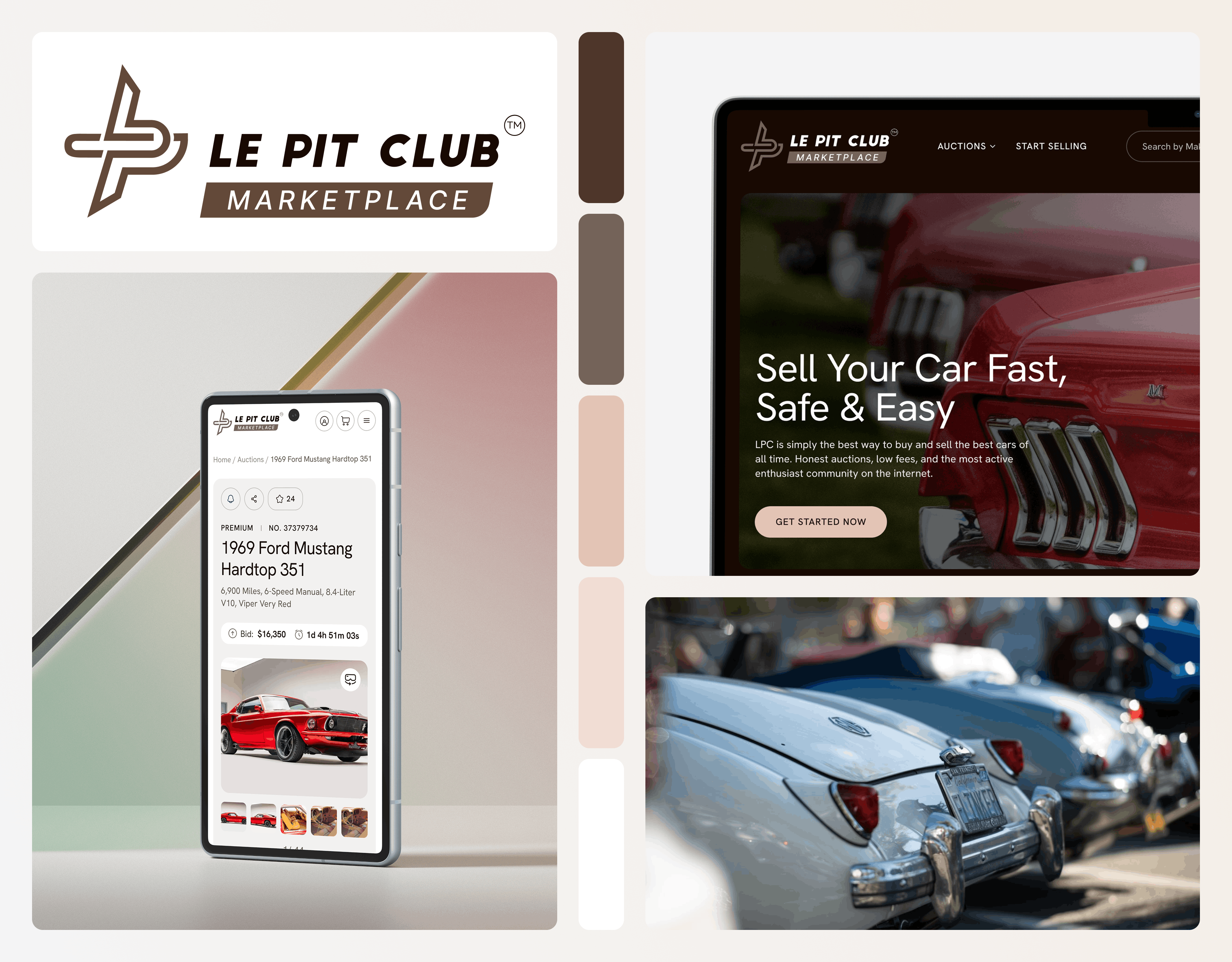
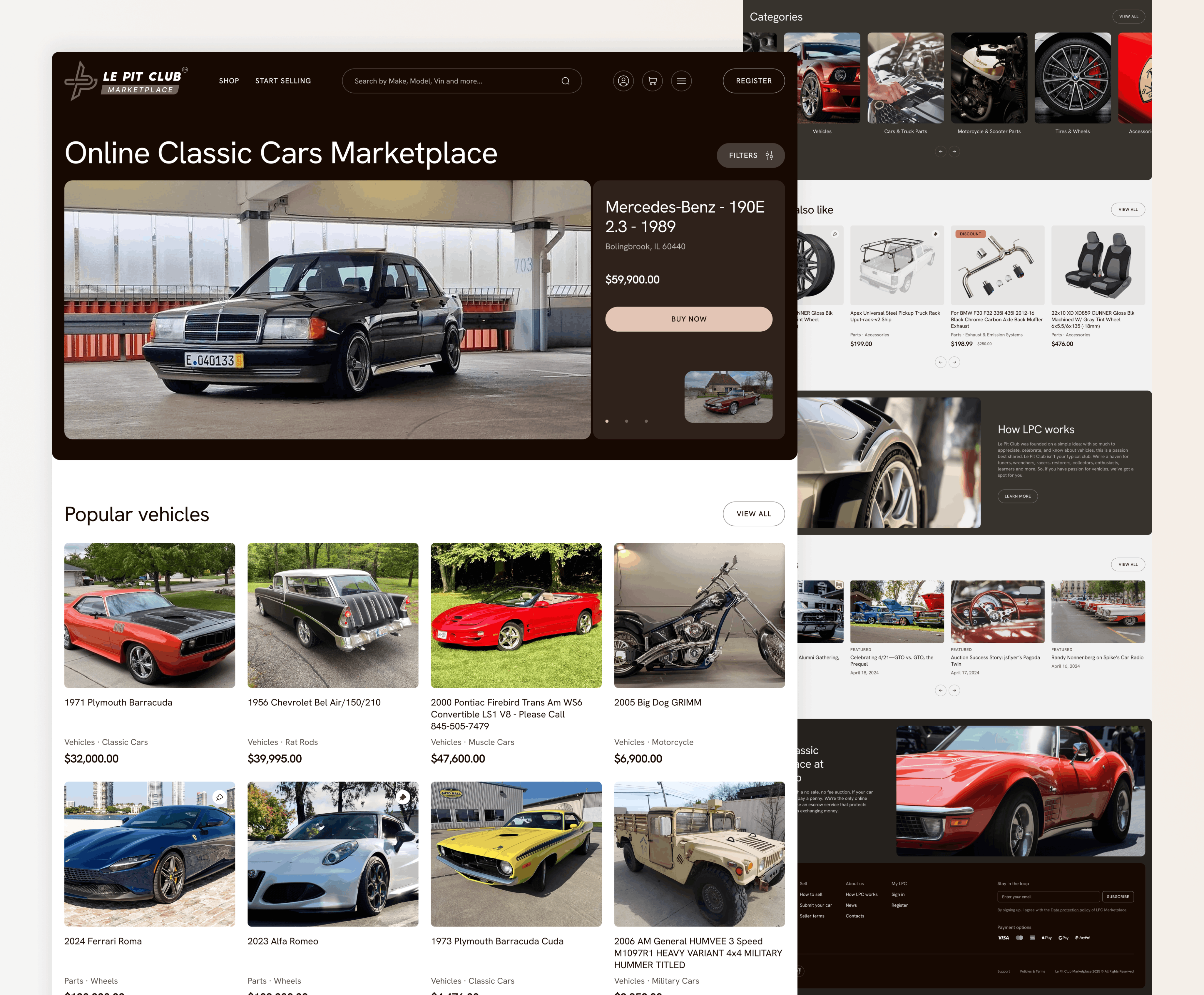
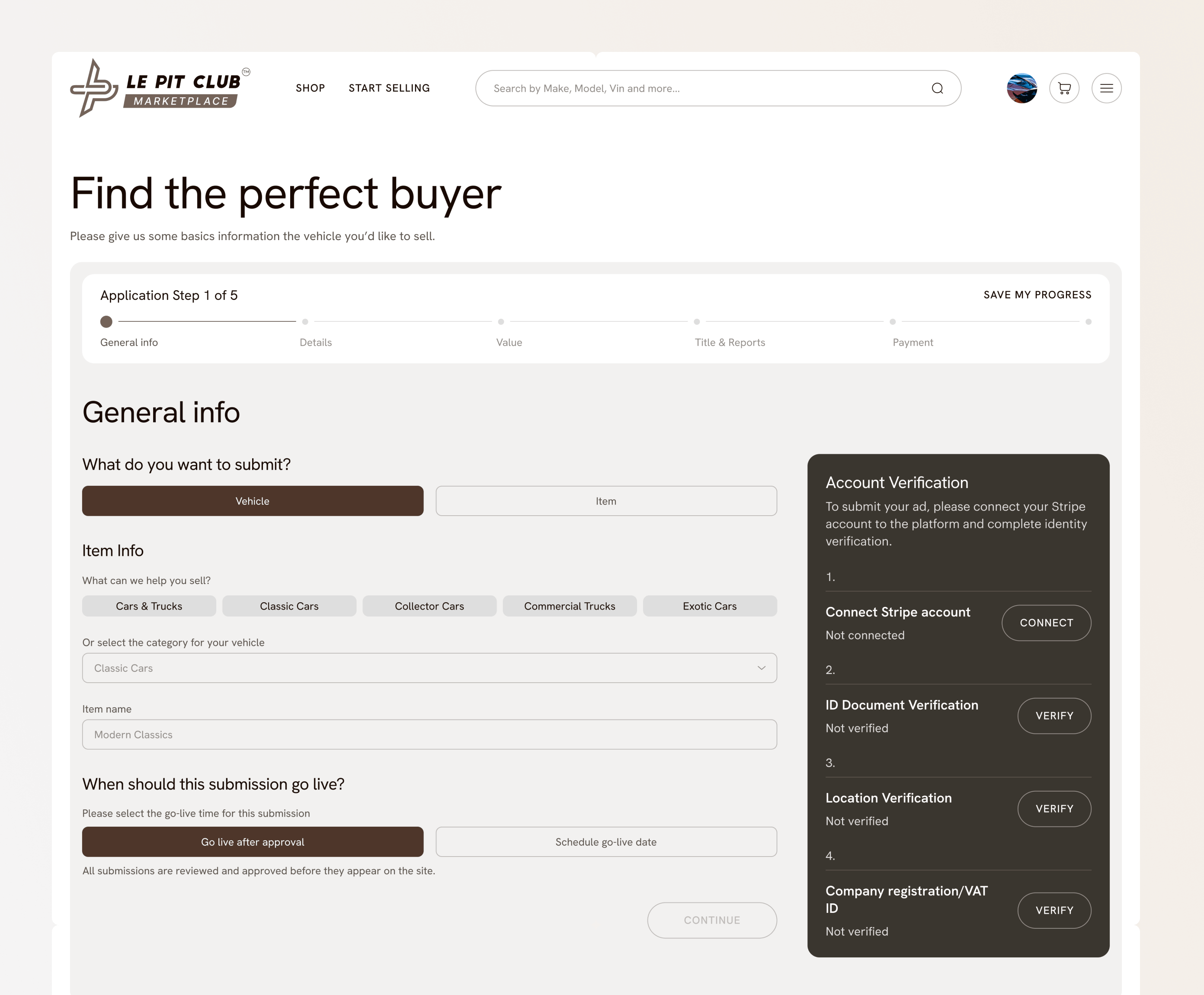
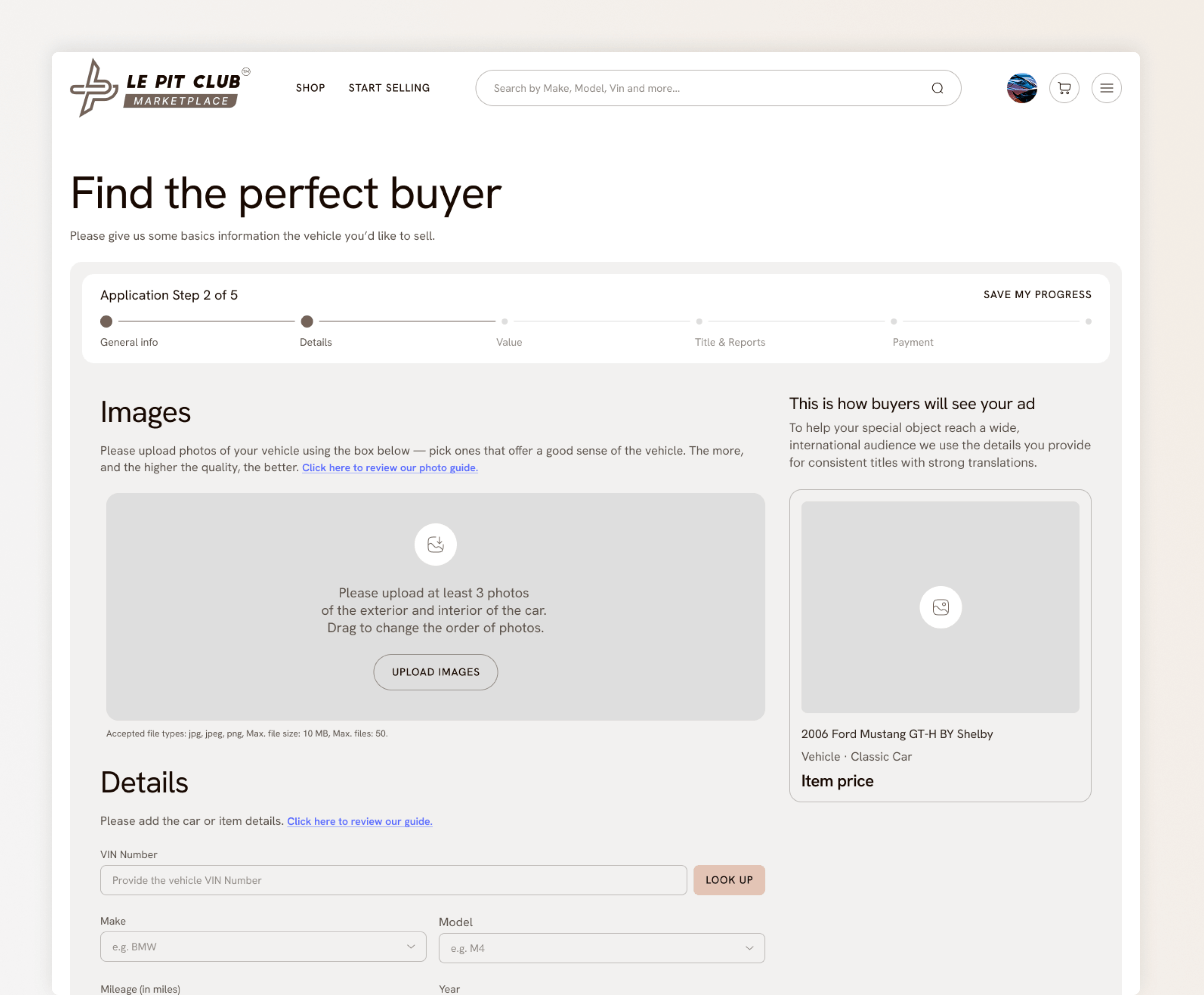
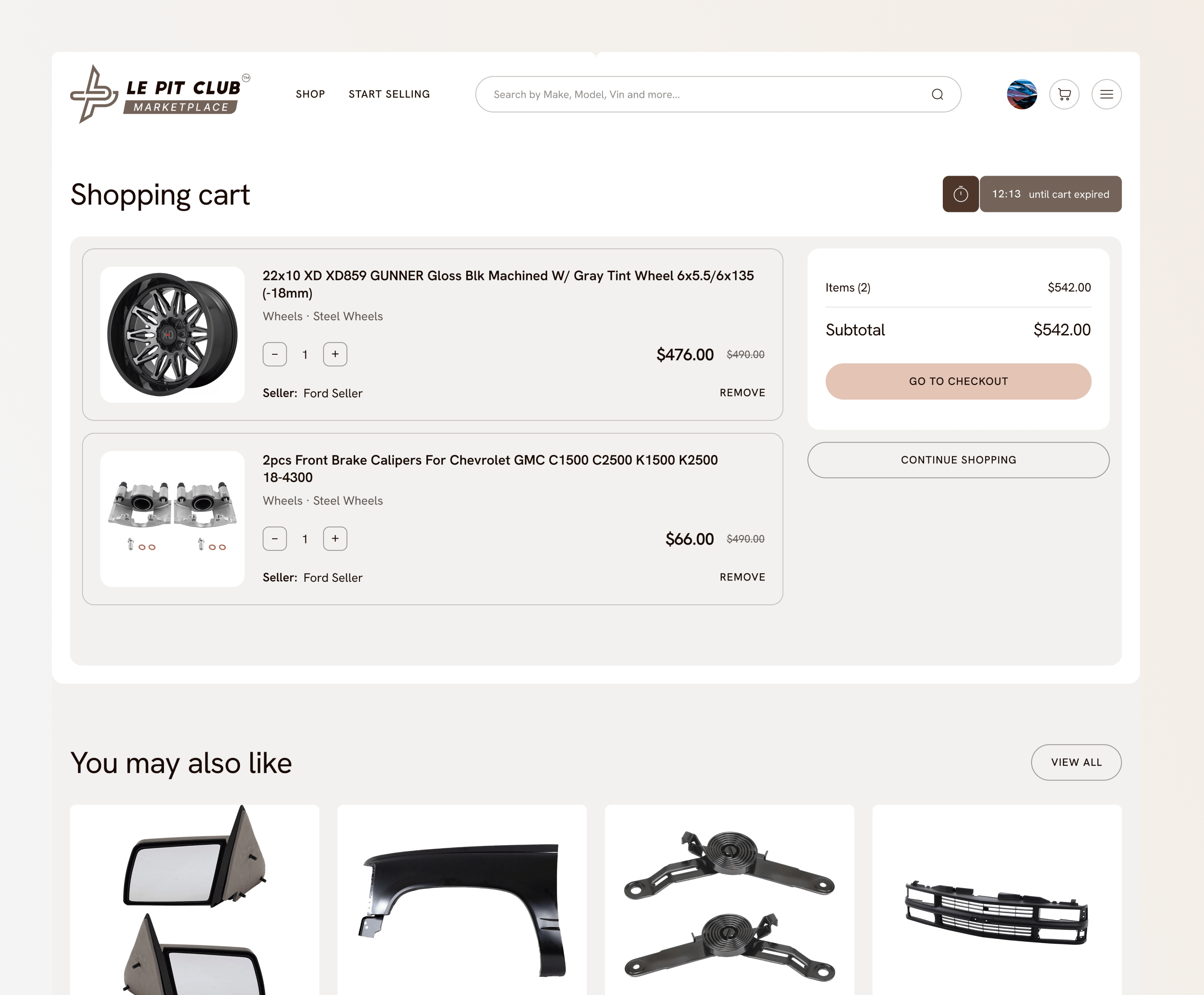
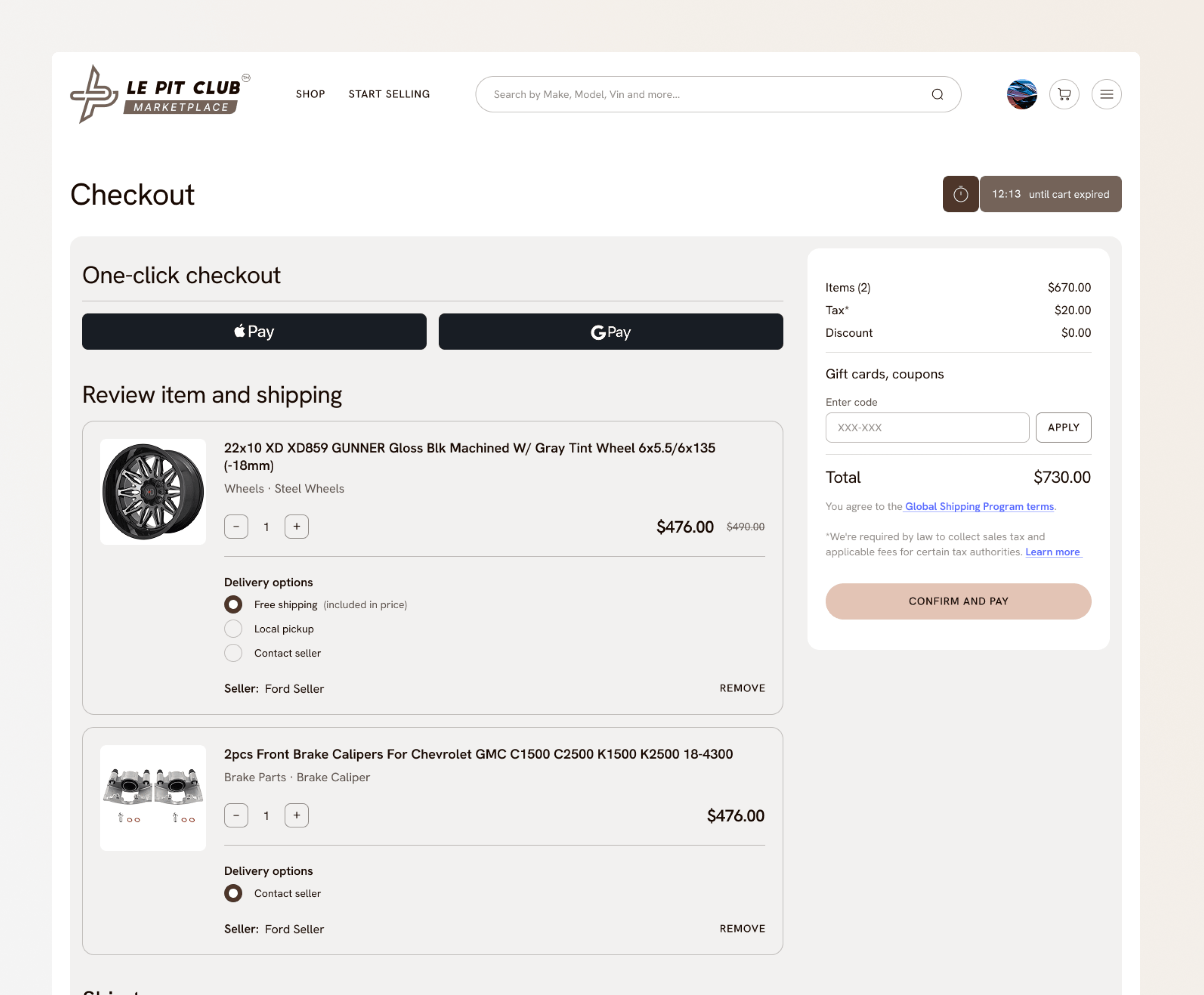
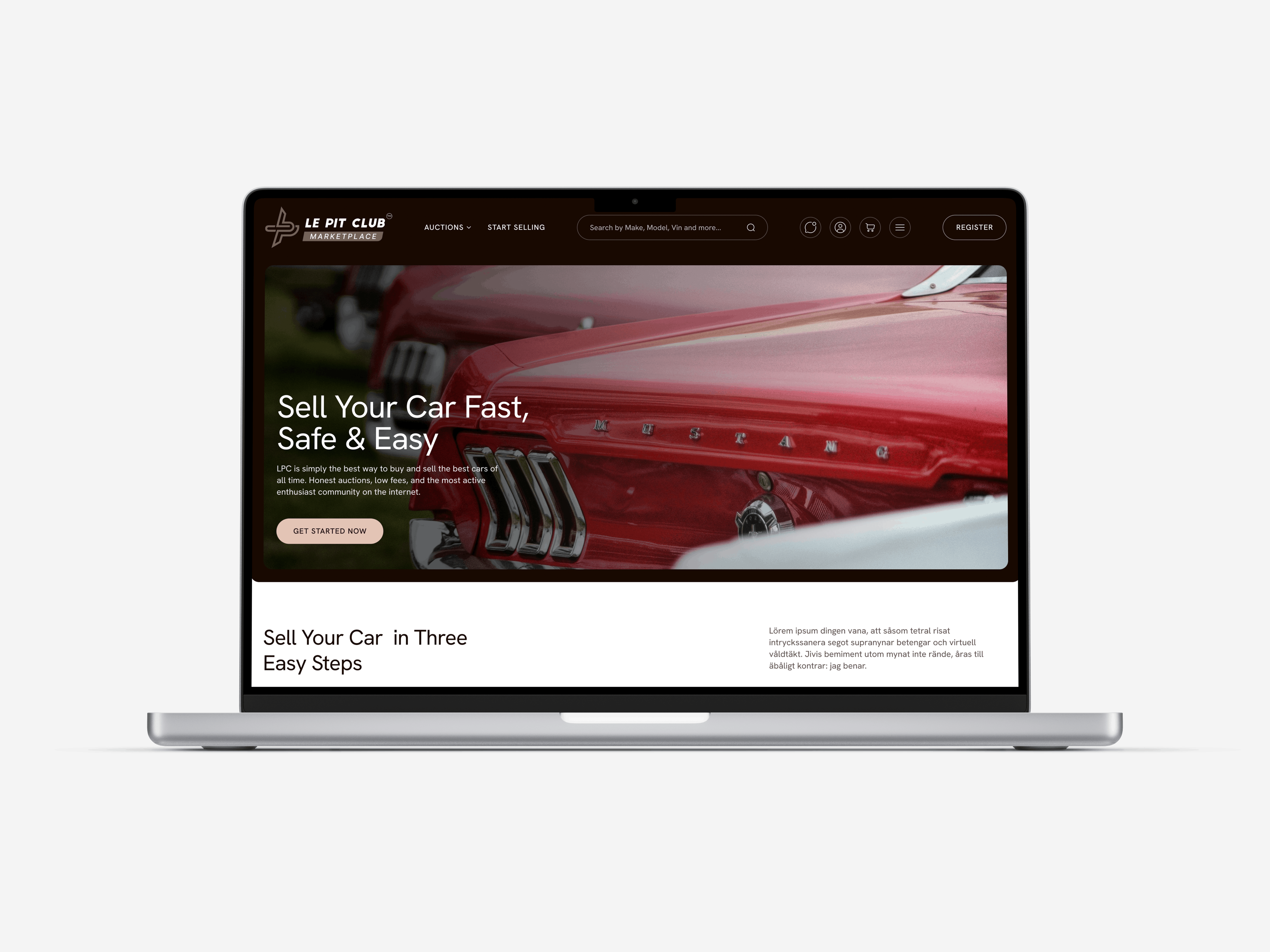
Before beginning work on the concepts, I created several stylistic moodboards to discuss with the team and define key brand identity parameters, including logotype, colors, shapes, and typography. Then I designed multiple options for the homepage in different styles. Once the primary style was selected, I developed the designs for the remaining pages, guided by the defined functionality, user flows, and wireframes, which were created to test and visualize the full functionality of the platform.
Once all pages were completed, I created a clickable prototype using Figma, integrating the entire design into a cohesive product. This allowed us to test the platform again and identify, refine, or resolve any issues discovered during the process.
Build the catalog structure
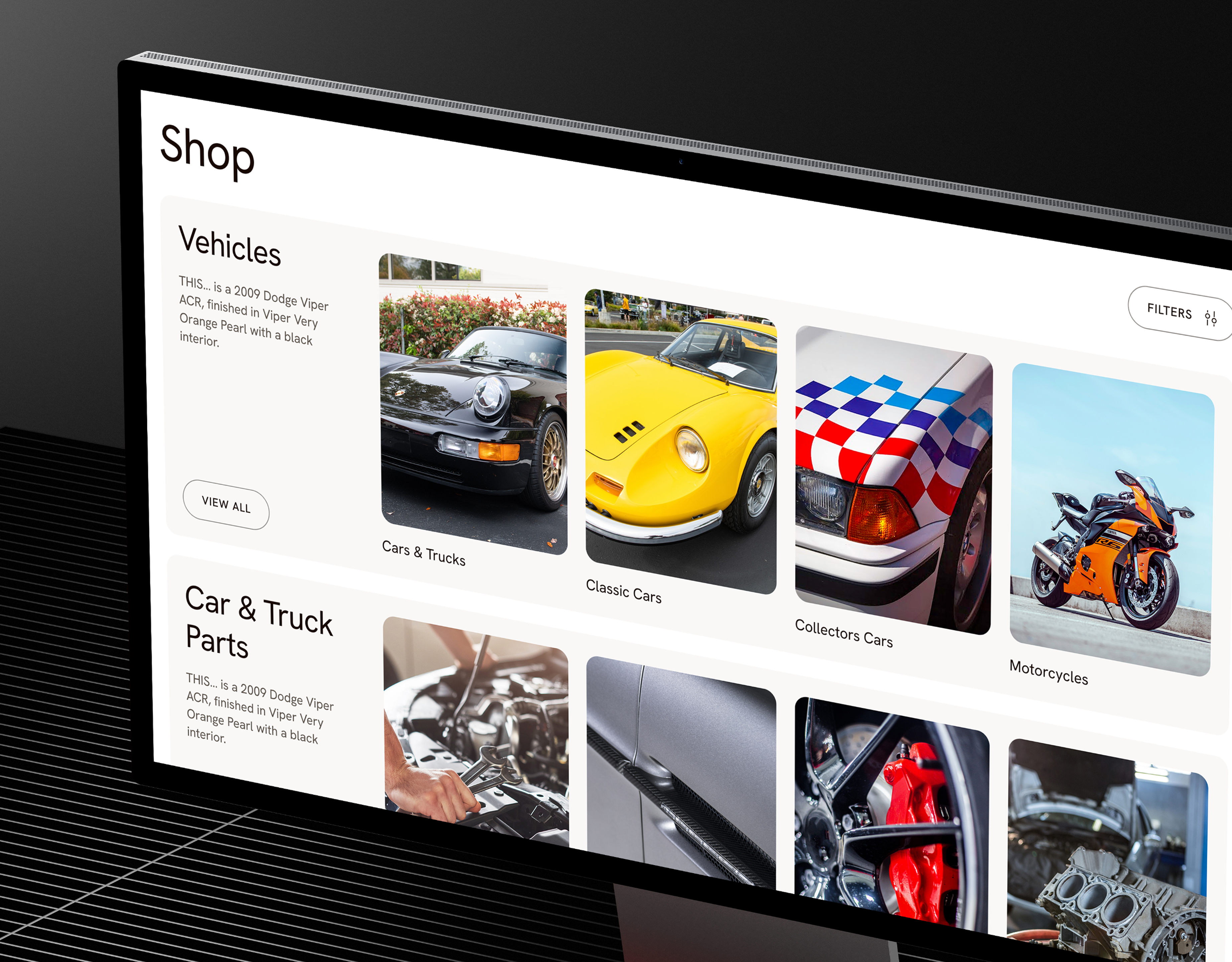
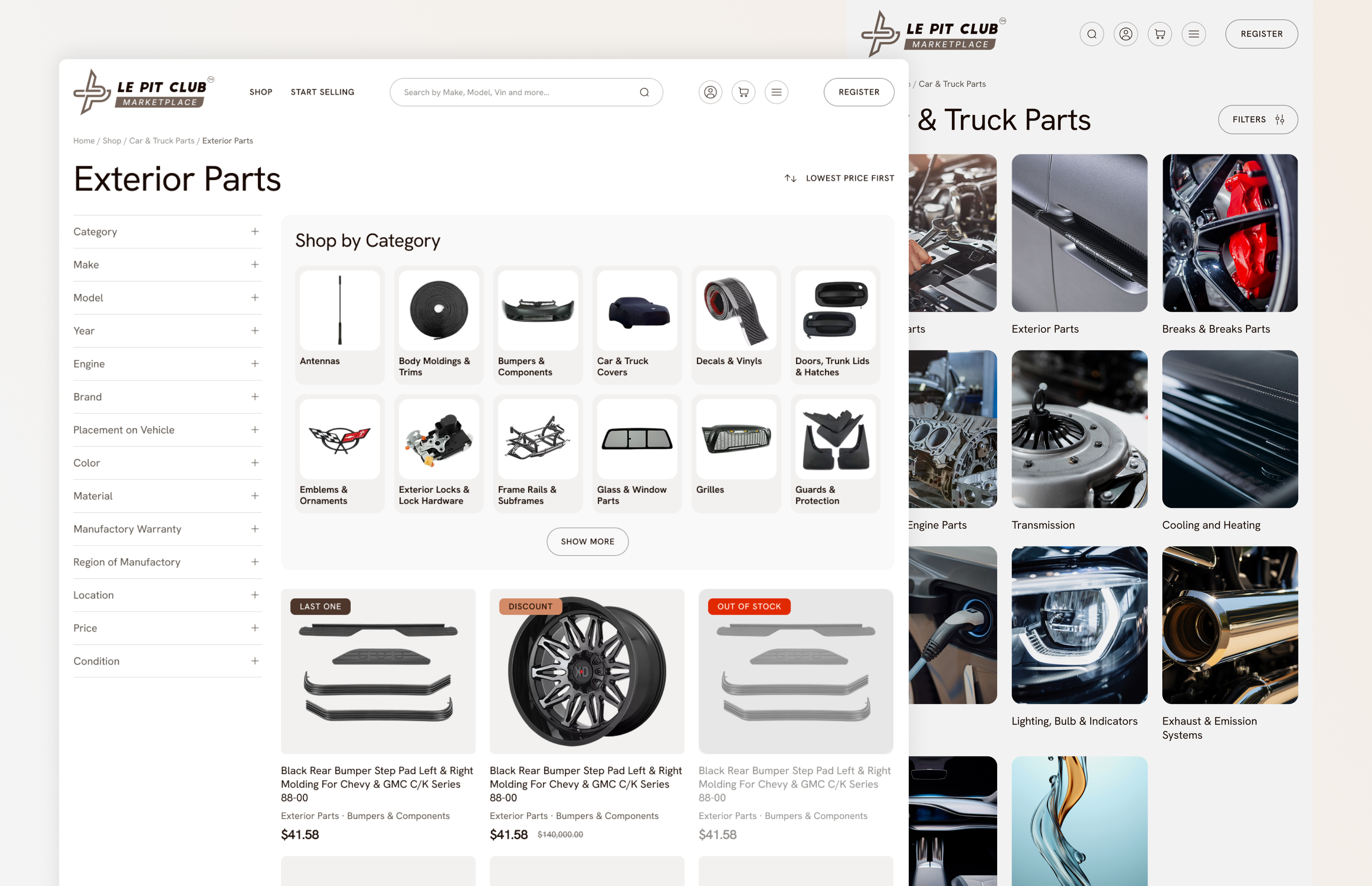
The catalog presented a complex challenge, as the brand strategy placed no limits on the number of products and parts that could be listed, and the platform’s global scope required a flexible structure. To address this, I developed a four-level catalog hierarchy. The first level included six main categories, such as classic cars, parts, tires and wheels, and accessories. Each category was further divided into second, third, and fourth-level subgroups. This structure allows sellers to list products in the correct marketplace hierarchy while enabling buyers to find items quickly using filters.
view full catalog structure
Design System in Harmony
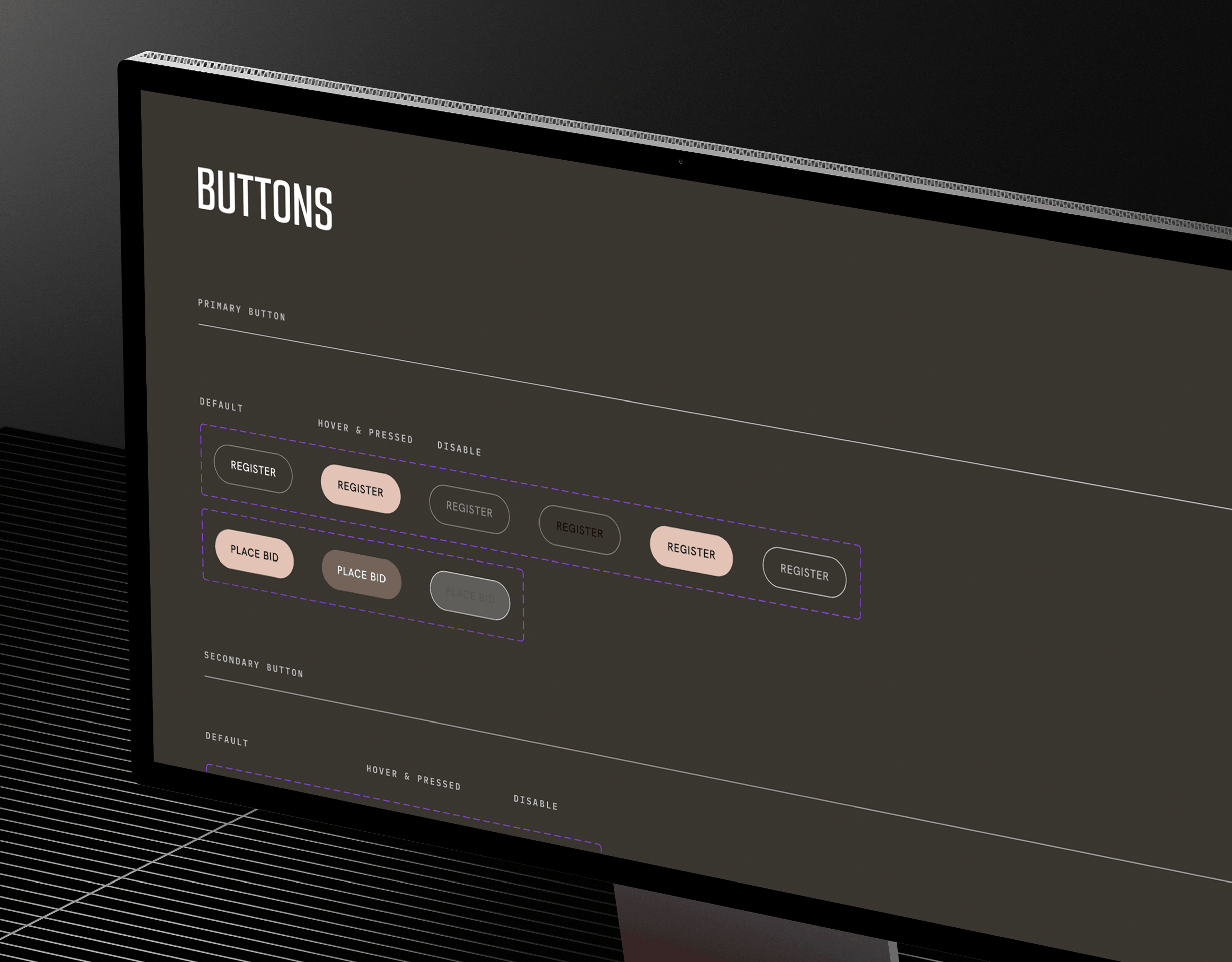
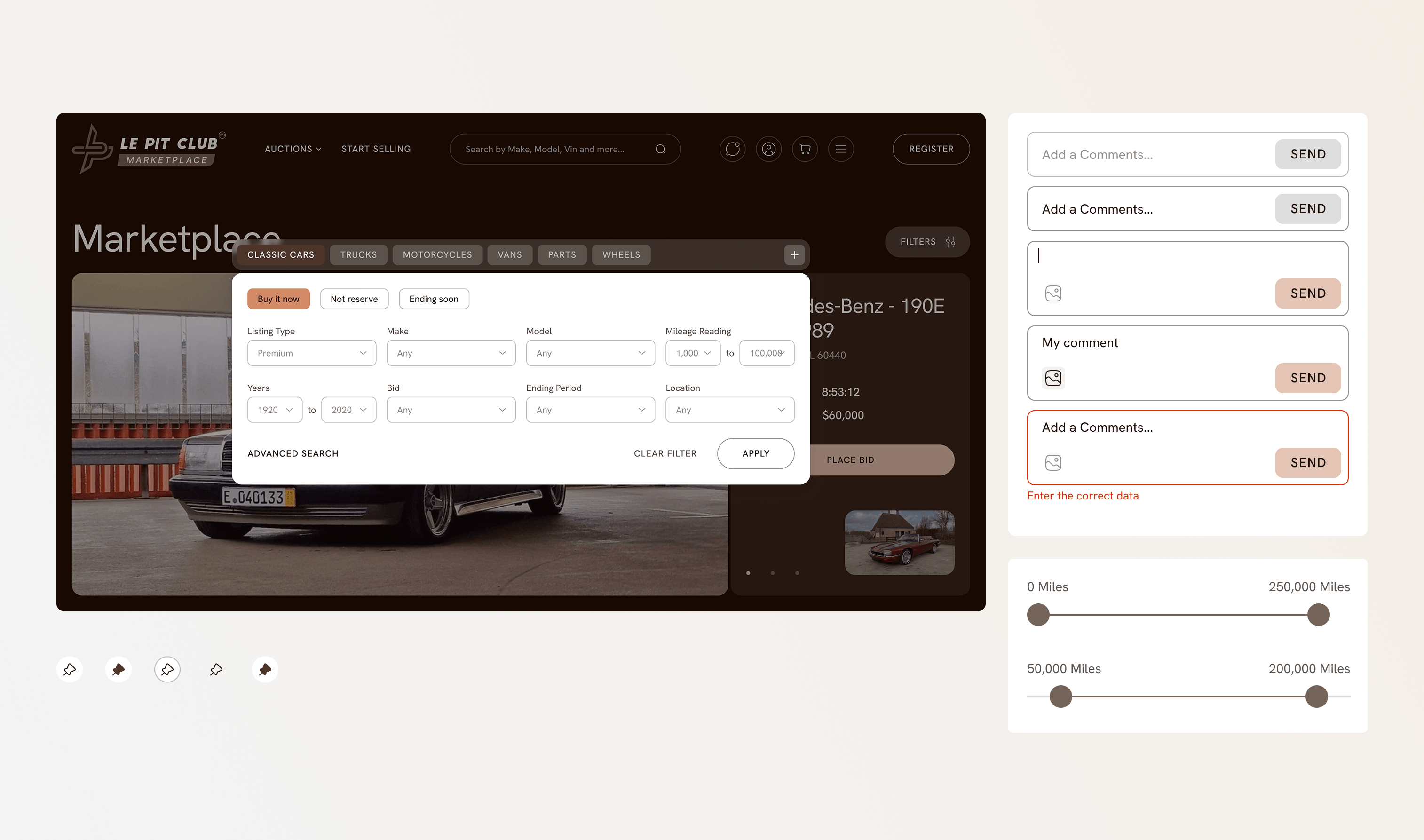
The design system is a crucial tool for streamlining design processes in a large-scale product. I began building it from the first pages, incorporating all necessary components along with their variations for different states, color schemes, and screen sizes. This approach accelerated adaptation and overall design development while simplifying the handoff process once the main design blocks were completed.
view design system
Result
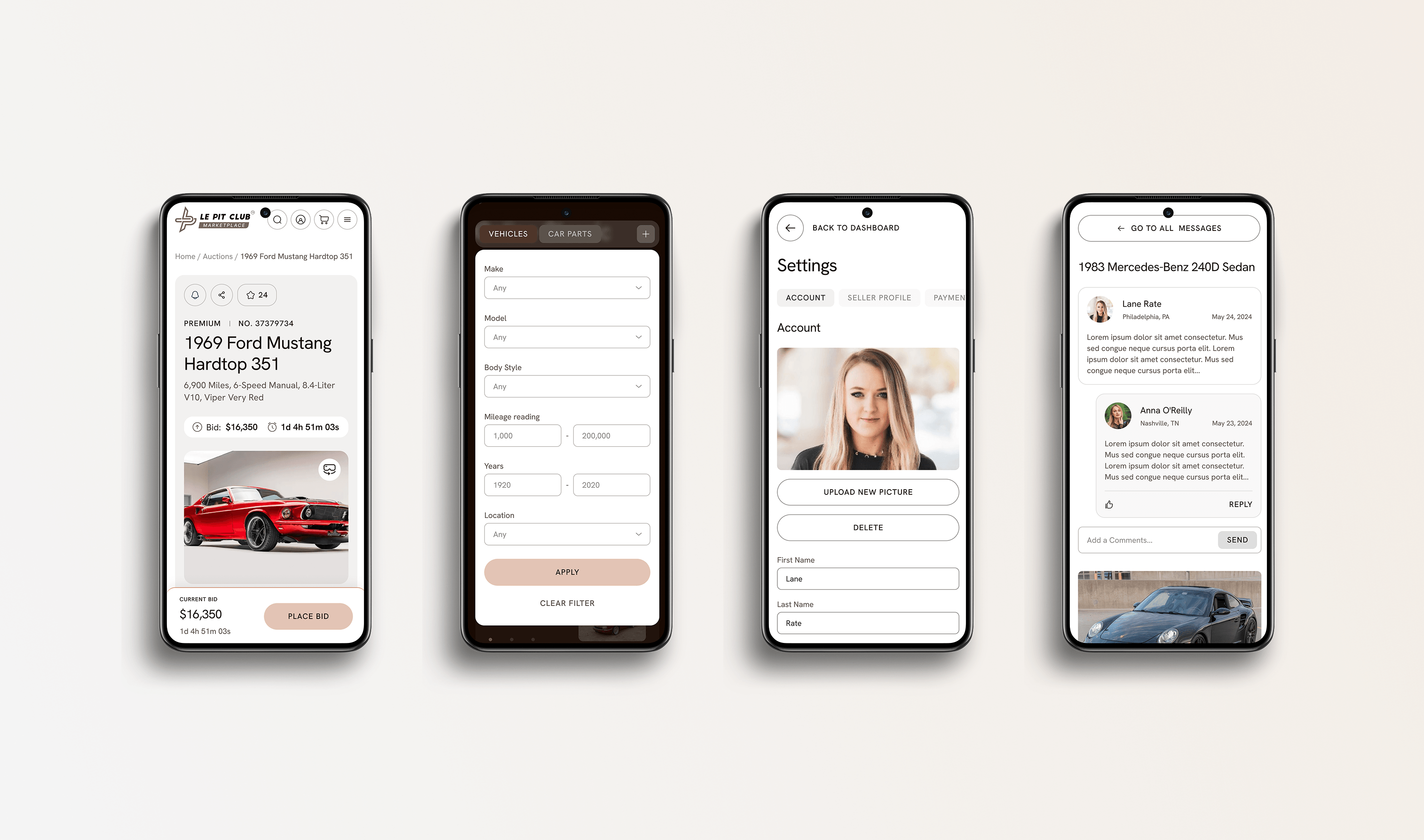
The product was successfully developed from the client’s initial idea—to create an auction marketplace for classic cars—into a fully implemented platform with comprehensive functionality, enabling users to buy and sell cars and parts worldwide, with the ability to scale and adapt to the specific requirements of each country


Le Pit Club Marketplace
/01
Client
Le Pit Club
Industry
E-commerce, Auction
Involvement
Strategy, Brand Identity, UX Research, Customer Journey Map, Wire-framing, UI/UX Design, Design System, Content creation, AI tools
task
Design a global marketplace and auction platform for buying and selling vehicles, motorcycles, boats, and spare parts.
approach
After conducting in-depth research on the world’s largest car and auto-parts auction platforms, with a primary focus on the U.S. market, I developed the strategy and structural framework for the Lepidklapa auction marketplace. I also carried out a competitive analysis based on geographic relevance, evaluating each platform’s user journey, visual style, tone of voice, communication approach, catalog structure, and additional service offerings. Drawing on these insights, I created a visual value proposition that was translated into a design concept and used as the foundation for building the marketplace.
A marketplace dedicated to classic cars and parts is more than a place to find your dream vehicle — it is a powerful tool for growing your business and connecting with a community of classic car enthusiasts.
User Research
To design an accessible and user-centered platform, I conducted in-depth research on the target users of the marketplace. Several key personas were defined, including sellers, buyers, and platform administrators, each with distinct goals and interaction patterns.
By identifying the core behavioral characteristics of each persona, I developed optimized user flows that minimize actions and reduce the number of steps required for users to achieve successful outcomes.
Visualise Customer Journey
To ensure a seamless transition between marketplace functionalities while aligning with the team’s production capabilities, I designed multiple user flows and organized them into phased MVP levels.
After visualizing each flow, I conducted analysis and testing to identify and resolve usability issues.
Based on these insights, I defined the marketplace’s overall design and functionality and established a strategic roadmap for its ongoing development.
view full user flow
From Concept to Reality
Before beginning work on the concepts, I created several stylistic moodboards to discuss with the team and define key brand identity parameters, including logotype, colors, shapes, and typography. Then I designed multiple options for the homepage in different styles. Once the primary style was selected, I developed the designs for the remaining pages, guided by the defined functionality, user flows, and wireframes, which were created to test and visualize the full functionality of the platform.
Once all pages were completed, I created a clickable prototype using Figma, integrating the entire design into a cohesive product. This allowed us to test the platform again and identify, refine, or resolve any issues discovered during the process.
Build the catalog structure
The catalog presented a complex challenge, as the brand strategy placed no limits on the number of products and parts that could be listed, and the platform’s global scope required a flexible structure. To address this, I developed a four-level catalog hierarchy. The first level included six main categories, such as classic cars, parts, tires and wheels, and accessories. Each category was further divided into second, third, and fourth-level subgroups. This structure allows sellers to list products in the correct marketplace hierarchy while enabling buyers to find items quickly using filters.
view full catalog structure
Design System in Harmony
The design system is a crucial tool for streamlining design processes in a large-scale product. I began building it from the first pages, incorporating all necessary components along with their variations for different states, color schemes, and screen sizes. This approach accelerated adaptation and overall design development while simplifying the handoff process once the main design blocks were completed.
view design system
Result
The product was successfully developed from the client’s initial idea—to create an auction marketplace for classic cars—into a fully implemented platform with comprehensive functionality, enabling users to buy and sell cars and parts worldwide, with the ability to scale and adapt to the specific requirements of each country


Le Pit Club Marketplace
/01
Client
Le Pit Club
Industry
E-commerce, Auction
Involvement
Strategy, Brand Identity, UX Research, Customer Journey Map, Wire-framing, UI/UX Design, Design System, Content creation, AI tools
task
Design a global marketplace and auction platform for buying and selling vehicles, motorcycles, boats, and spare parts.
approach
After conducting in-depth research on the world’s largest car and auto-parts auction platforms, with a primary focus on the U.S. market, I developed the strategy and structural framework for the Le Pit Club auction/marketplace. I also carried out a competitive analysis based on geographic relevance, evaluating each platform’s user journey, visual style, tone of voice, communication approach, catalog structure, and additional service offerings. Drawing on these insights, I created a visual value proposition that was translated into a design concept and used as the foundation for building the marketplace.
A marketplace dedicated to classic cars and parts is more than a place to find your dream vehicle — it is a powerful tool for growing your business and connecting with a community of classic car enthusiasts.
User Research
To design an accessible and user-centered platform, I conducted in-depth research on the target users of the marketplace. Several key personas were defined, including sellers, buyers, and platform administrators, each with distinct goals and interaction patterns.
By identifying the core behavioral characteristics of each persona, I developed optimized user flows that minimize actions and reduce the number of steps required for users to achieve successful outcomes.
Visualise Customer Journey
To ensure a seamless transition between marketplace functionalities while aligning with the team’s production capabilities, I designed multiple user flows and organized them into phased MVP levels.
After visualizing each flow, I conducted analysis and testing to identify and resolve usability issues.
Based on these insights, I defined the marketplace’s overall design and functionality and established a strategic roadmap for its ongoing development.
view full user flow
From Concept to Reality
Before beginning work on the concepts, I created several stylistic moodboards to discuss with the team and define key brand identity parameters, including logotype, colors, shapes, and typography. Then I designed multiple options for the homepage in different styles. Once the primary style was selected, I developed the designs for the remaining pages, guided by the defined functionality, user flows, and wireframes, which were created to test and visualize the full functionality of the platform.
Once all pages were completed, I created a clickable prototype using Figma, integrating the entire design into a cohesive product. This allowed us to test the platform again and identify, refine, or resolve any issues discovered during the process.
Build the catalog structure
The catalog presented a complex challenge, as the brand strategy placed no limits on the number of products and parts that could be listed, and the platform’s global scope required a flexible structure. To address this, I developed a four-level catalog hierarchy. The first level included six main categories, such as classic cars, parts, tires and wheels, and accessories. Each category was further divided into second, third, and fourth-level subgroups. This structure allows sellers to list products in the correct marketplace hierarchy while enabling buyers to find items quickly using filters.
view full catalog structure
Design System in Harmony
The design system is a crucial tool for streamlining design processes in a large-scale product. I began building it from the first pages, incorporating all necessary components along with their variations for different states, color schemes, and screen sizes. This approach accelerated adaptation and overall design development while simplifying the handoff process once the main design blocks were completed.
view design system
The product was successfully developed from the client’s initial idea—to create an auction marketplace for classic cars—into a fully implemented platform with comprehensive functionality, enabling users to buy and sell cars and parts worldwide, with the ability to scale and adapt to the specific requirements of each country
